


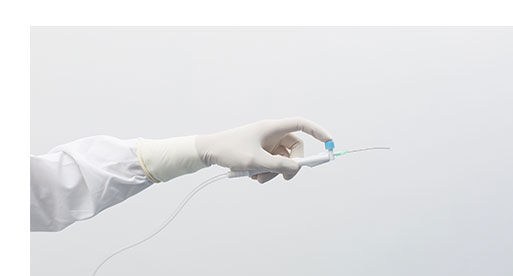


Irrigation lines and compatible accessories: selection guide
In implant surgery procedures, maintaining the correct temperature of the surgical site is essential for preventing postoperative complications and implant failure. If not adequately controlled, the friction produced by the burrs can in fact cause the bone to overheat, leading to necrosis (osteonecrosis). Irrigation lines are used specifically to convey the saline solution onto the bur and the bone, maintaining a clean surgical field and preventing overheating of the tissue.
Today, there are third-party accessories available on the market that are compatible with various physiodispensers and micromotors. The wide range of available disposable irrigation lines and saline solutions compatible with practice equipment is an advantage, but careful selection is required in order to avoid compromising the safety of the patient and the effectiveness of the procedure. So how can you identify a truly reliable accessory?
Regulations on third-party accessories
Regulation (EU) 2017/745 on Medical Devices (MDR) allows the use of spare parts and accessories produced by companies other than the device manufacturer, provided they do not adversely affect safety and performance. Article 23 states that any manufacturer making an equivalent component available must ensure that it maintains or restores the function of the device without altering its safety characteristics.
Why choose compatible third-party consumables instead of original products in the medical market?
Choosing compatible third-party consumables can be a real opportunity to optimize costs, management and business continuity, without compromising on quality, safety and traceability.
A compatible consumable is not simply a second-choice alternative to the original. It is a product designed to be used with specific devices or systems, in compliance with the applicable requirements and with a clear focus on the operational needs of practices, clinics, and distributors.
In this sense, choosing quality compatible solutions offers several advantages:
1.Better value for money
The price of original products often includes the brand value of the manufacturer of the machine or system. A compatible third-party consumable, if properly designed and documented, can offer performance suitable for the intended use, but at a more competitive cost per cycle, treatment, or procedure.
2.Greater continuity of supply
A reliable supplier of compatible consumables can reduce the risk of operational downtime when original consumables are subject to distribution constraints or limited availability.
3.More freedom of choice
Compatible consumables allow practices, clinics and distributors to avoid relying exclusively on the original device manufacturer. This increases flexibility in purchasing, expands procurement options, and improves budget management capacity.
4.Compatibility with multiple systems
Many compatible third-party consumables are developed to be used with different brands or models. This simplifies purchasing, reduces inventory complexity, and facilitates the work of dealers, especially when they need to serve customers with different types of equipment.
5.Innovation that goes beyond the original product
The original product is not always the only possible solution, or even necessarily the most advanced. A high-quality compatible consumable can offer improvements in terms of materials, packaging, sustainability, practicality of use, or logistics management, while maintaining compliance with the requirements applicable to the medical market.
Choosing compatible third-party consumables does not mean compromising. It means adopting a more flexible, efficient and informed solution, provided that the product is compliant, documented, traceable and suitable for its intended use.
How can you recognize a quality irrigation line?
To distinguish reliable accessories from low-quality products, there are certain easily verifiable factors that can be taken into consideration. Here are some practical tips:
- Brand reputation: Choose brands that are well-known in the Medical Device sector and that are easy to contact for assistance.
- The manufacturer: Check who actually manufactured the device by reading the company name indicated on the label next to this symbol .
- Country of production: Avoid brands that do not disclose where their products are manufactured; they usually have something to hide. The words “Made in…” on the packaging must be clear.
- Sterility and packaging: Irrigation lines must be individually packed in sterile blister packs and bear the sterilization date and the expiry date. Some lines offer up to 59 months of sterility.
- Safe materials: Components must be medical grade and free from latex and phthalates. Parts that come into contact with the liquid must be biocompatible and tested according to ISO 10993.
- Traceability: Packaging must include adhesive labels with the batch and expiry date to facilitate registration in the sterilization system.
In addition, upon receipt of the package, it is important to always check that it is intact and not damaged. The package must be opened according to the instructions and checked to ensure that the accessories are completely clean and free from traces of solvents, dust or debris.
Euronda Alle: quality and advantages
Euronda Alle irrigation lines are designed to ensure safety, versatility and compatibility with most physiodispensers and implant drills on the market. The key features of the range of infusion sets are:
- High quality and safe materials: The Alle lines are made using silicone, medical PVC and ABS, free from latex and phthalates; the peristaltic pump section uses soft silicone to ensure a constant and calibrated flow.
- Extensive compatibility Many different models are available, compatible with over 60 models of physiodispensers and micromotors.
- Sterility guaranteed: Every line is individually packed in sterile blister packs with a double label for maximum traceability. Sterility is guaranteed for 59 months from the date of production.
- Produced in an ISO 8 clean room with rigorous quality controls: The lines are manufactured in Italy in ISO 8 clean rooms and are subject to inspections during assembly, packaging and pre‑sterilization.
- Certified biocompatibility: The biocompatibility of the materials is assessed in accordance with the ISO 10993 standard with tests for cytotoxicity, intracutaneous reactivity, sensitization, acute systemic toxicity and pyrogenicity.
Additional unique advantages: In addition to the features listed above, the Euronda Alle lines have some advantages over other products on the market:
- Tip with glossy surface: The tip (spike) is characterized by a smooth and shiny surface, free of moulding artefacts.
- Roller with smaller dimensions and rounded edges: the roller is more compact than many competitor versions, and the rounded edges reduce the risk of snagging on gowns or surgical drapes.
- Conical tip: The silicone tip has a conical shape to adapt to the various contrangles and securely fix the tube to the handpiece; this reduces the risk of slippage during surgery.
- Anti‑kink segment: The section of tube running from the surgical motor to the handpiece is designed to prevent bends or “kinks”, ensuring a constant flow even when the line is stressed or bent.
- MDR compliant: They are classified as Medical Devices Class IIa and comply with Regulation (EU) 2017/745, so there is no risk of them being withdrawn from the market due to regulatory changes.
- Multilingual labelling and instructions: The instructions for use (IFU) are available in 24 languages, to support dentists and operators in every country.
Choosing Euronda Alle irrigation lines means relying on an Italian product developed specifically for dental surgery. The company provides advice to support professionals, and offers product trials free of charge, providing fast and professional service.
Conclusions
The use of third-party accessories is a widespread practice in the medical field. However, in order to avoid putting patients and professionals at risk, it is essential to ensure that these accessories are compliant Medical Devices and compatible with the equipment being used. The European regulations (MDR) require that equivalent components maintain the performance and safety of the original device and that they are accompanied by a declaration of conformity and CE marking.
When evaluating irrigation lines for implant surgery, in addition to these requirements, it is advisable to consider the quality of the materials, the ergonomics of the components, sterility, traceability, and the reliability of the manufacturer. Euronda Alle lines meet all these criteria. They offer extensive compatibility with the leading physiodispensers, are biocompatible and latex-free, guarantee sterility for 59 months, and are manufactured and tested in Italy in accordance with international standards.
Choosing quality accessories not only guarantees safety; it also means optimizing clinical work and contributing to the success of implant treatment.
Sources
- Euronda Alle – “Guide to irrigation lines” (PDF) – This guide was the main reference: it provides details on the importance of maintaining the temperature at the implant site (necrosis occurs at temperatures above 47°C for more than one minute), describes the composition and essential components of the irrigation lines, explains the sterile packaging and the duration of sterility (59 months), specifies the materials used (PVC, silicone, ABS) and their biocompatibility, as well as the quality controls carried out in an ISO 8 clean room.
- Regulation (EU) 2017/745, Article 23 – Equivalent replacement parts and accessories – This regulation states that third-party accessories are only permitted if they do not alter the performance and safety of the original device and if equivalence is documented. If this is not the case, the accessory is considered a new device and must meet all the requirements of the MDR.
- Guidelines on CE marking and documentation – According to European legislation, all devices and accessories must be accompanied by a declaration of conformity, a data sheet and instructions in Italian. For devices other than Class I, a certificate from a notified body is required, and the CE marking (including the number of the body, if applicable) must be affixed to the device or packaging.
- Euronda Alle Blog – “Accessories for dental equipment in surgery – what is permitted?” (article in English) – This Euronda blog article emphasizes that the use of third-party accessories is only possible if the manufacturer certifies their compatibility, MDR compliance, and the availability of CE marking, technical data sheet and IFU. The article also recommends checking the reputation of the manufacturer and the origin (“Made in…”).
- “Alle® irrigation line details” section of the PDF – This section shows the classification of the irrigation lines as Medical Device Class IIa, the available variants (monoirrigation, external irrigation, double irrigation), the materials (silicone, PVC, ABS), the guaranteed sterility and the compatibility with numerous models of physiodispensers and implant drills.
- Section on biocompatibility tests – The Alle guide documents the tests carried out according to ISO 10993 (chemical characterization, cytotoxicity, skin sensitization, intracutaneous reactivity, acute systemic toxicity, etc.), confirming that the materials are phthalate-free and MDR-compliant.